
A reader wrote in last week to say he disagreed with some of what I have been writing. Good! That is the point.
I have been writing this blog for six weeks. In that time I have argued that Dallas should tear down City Hall, built a financial model to try and prove it, painted you a picture of Downtown in twenty years, and even spent a week on libraries. Thousands of people have read along so far (crazy, right?) and dozens of you have reached out.
I have also been wrong in public. That part matters. The leaked emails have made the City Hall process look worse than I hoped, and I had to write about it, because not doing so would have been not telling the truth. My Sunday school teacher never taught me the difference between not telling the truth and lying. I do not think she thought there was one.
I am not trying to be right. I am trying to be honest. I am trying to be worth arguing with.
This is not my usual newsletter. There is no spreadsheet this week. No council vote, no leaked email, no dollar amount with one too many commas. I have been writing about Dallas for six weeks and I owe you a plain account of what I think I am doing here before I go back to the numbers next week. There will be more spreadsheets. I promise.
The test for me is simple. If I read an article again in ten or fifteen years, after the facts have changed and Dallas has done whatever odd thing it was always going to do, I want to be able to defend the reasoning even if I would no longer defend the conclusion. The Mavericks might just leave for Irving. The arena deal might fall apart or it might be the best thing that ever happened to the south-west end of Downtown. The libraries might reopen. They might not.
I cannot control any of that. What I can control is whether the principles I used to arrive at the conclusion were sound. Whether I engaged with the strongest version of the other side’s argument rather than the weakest. Whether, when the evidence moved against me, I followed it instead of pretending it had not moved.
If the principles hold, I’ll feel okay about it. Even if I would make a different call with the benefit of hindsight.
That is the standard. Everything else is just rooting for a team.
Good vs. Good
The specific principle I keep coming back to is one that almost nobody in public life will say out loud: every good policy has a cost, and the cost usually comes at the expense of something else that is also good.
We have somehow arrived at a version of politics in which tradeoffs do not exist. Every policy is all upside if your team proposed it. Every policy is all downside if theirs did. Tax cuts will pay for themselves. Congestion will ease if we just add one more lane. (How’d that go?) Nobody loses. Nobody sacrifices anything they value.
This is, to use a technical term, bullshit.
It is bullshit because the most important questions are not choices between good and evil. Those are the easy ones, or at least, they should be. I am aware that some of what passes for politics in 2026 does not fit this framework. Some things are not tradeoffs. They are just wrong, and saying so should not require a spreadsheet. I am talking about the rest of the boring, everyday decisions that a city makes, like maintaining its buildings and picking up the trash.
The hard (and boring) choices are between good and good, and even more between bad and bad. Choosing one good thing means getting less of another good thing. That is what a tradeoff is. It is the price of choosing.
There are load-bearing contradictions at the heart of any society. Tradeoffs that human nature never lets you escape. Freedom is good. Order is good. A society that maximizes freedom at the expense of order is not a paradise. It is a place where the strong do whatever they want and everyone else locks their doors. Conversely, a society that maximizes order at the expense of freedom is not safe. It is a place where the streets are clean and the jails are full. The American system, at its best, holds these two goods in tension. The Constitution is, among other things, an operating system for forcing that tension into a structure that survives the ambitions of the people operating it.
That requires something specific of the people making the decisions. It requires us to love both sides of the tradeoff. Not tolerate. Love. We have to believe that freedom is genuinely good and that order is genuinely good and that losing either one is genuinely bad. We have to choose. The choice should hurt.
Growth and preservation follow the same pattern. You can build the new thing or you can protect the old thing. You can tear down the historic building or you can spend a billion dollars keeping it standing. You can rezone the shopping center to add apartments, or you can keep collecting taxes on mostly empty parking lots.
Justice and mercy. A legal system that is all justice and no mercy is a machine that grinds people who made one mistake into dust. A legal system that is all mercy and no justice is a system where the people who follow the rules feel like suckers. At every sentencing, every parole hearing, every act of prosecutorial discretion, there is a human being standing at the intersection of two good things and picking one. The pain of picking is not a bug. It is the only evidence that the person choosing understands what they are giving up.
In Dallas this takes our own specific forms. Libraries are good. Low taxes are good. We cut the library budget in September and yell at the library director for closing four libraries in January. We talk about bond money as if it were free and property taxes as if they were being ripped out of the hands of the needy. We promise new parks with one hand and starve the old ones with the other. We approve a bond program and a police staffing mandate in the same year that cannot co-exist. The tradeoff does not disappear because it lived on two different spreadsheets.
Dallas is not special in facing these tradeoffs. Dallas is special in pretending they do not exist. This is perhaps our chief civic virtue.
In every case, the tradeoff is not a problem to be solved. It is a condition to be managed. The people who tell you they have solved it, that you can have order with no cost to freedom, growth without any cost to preservation, tax cuts with no cuts to services, are either lying to you or lying to themselves. The most dangerous are the ones who believe it.
The Reasons
The reason we have stopped naming tradeoffs is not complicated.
If I name the cost of my position, I have given the other side a weapon. I have admitted that something they value is real and that my choice damages it. In a political culture where the goal is to win the argument rather than to run the city well, that admission is a strategic error. You do not hand your opponent a talking point. You do not concede that their concerns are real. You do not say “this will hurt and here is who it hurts,” because someone will clip that sentence and use it against you in the next campaign ad or text message blast.
So, at first, we stop saying it. Then, we stop thinking it. Eventually, we arrive at a place where half the people believe that their preferred policies have no costs at all and the other half believe the same thing about theirs. Neither side can fathom why anyone would disagree, because disagreement requires acknowledging that the other side might value something worth valuing.
This is how you get a politics that feels like rooting for a team instead of governing a city. The other side is not just wrong about the tradeoff. The other side does not exist. There is no tradeoff. There is only our good idea and their obstruction.
Disagreement is not the thing that is broken. We clearly have not lost our ability to disagree. We have lost the ability to imagine why someone would disagree. We have lost the desire to talk to the person who does at all. That is the thing that is broken.
I find this increasingly difficult to live with. I think City Hall should come down. I do not think the fiscal math is close. I also think that the people who want to save it are protecting something real, and if I cannot name what they are protecting, and what it costs to override them, then I have not earned the right to make the argument.
What this is not
The version of public argument that is better than this is not centrism. It is not a slightly better-dressed “both sides have a point,” deployed by people do not want to commit. If I am nothing else, I am on a side, at least on the City Hall debate. What we need instead is the version where you pick a side, make your case, and name what your victory costs. Where you fight for your position without pretending the other side has nothing worth fighting for.
This is harder than it sounds. It means leaders telling their people things they do not want to hear. It means saying yes, this policy I support will make that thing you care about worse, and here is why I think the tradeoff is still worth it.
It means understanding the job is a series of tragic choices rather than a series of obvious ones.
I do not know how to make this popular. The version of politics where your side is right about everything and the other side are villains is more satisfying, more shareable, and better for fundraising. The version where every choice has a cost and every cost falls on someone is exhausting and depressing and makes for terrible yard signs. It hardly fits on a bumper sticker. (I tried.)
But it is how buildings get fixed. It is how cities get governed, and it is how the trash gets picked up.
The point.
I have told you what I think I am doing. I have not plainly said why I am doing it. Here goes.
I think the point of a city is to help its people build a life that is worth the trouble of living. Every tradeoff I have written about, the buildings, the budget, the libraries, is a different version of the same question: which path helps people in this city live a little better, or makes their life a little easier, or leaves this place a little better than we found it.
This city is not just where we live. It is our inheritance. It is where our kids are going to grow up, and hopefully their kids are going to grow up, and hopefully their kids are going to grow up, and hopefully it is still a place in which it is worth living when any of that happens.
So here is what I owe you for as long as I keep doing this.
I owe you my actual position, stated plainly, with the work visible. I owe you the strongest case against me, not the easiest one. I owe you the cost of what I am proposing, stated as clearly as the benefit. I owe you why I think it will make your or your kid’s life better, even if in some little ways, it will make your life worse. And when the evidence moves against me, I owe you the decency to move with it.
Most civic choices do not offer a clean win. They ask what we are willing to lose, who will pay for it, and whether we will admit that before we vote. A city that cannot say what it is willing to give up may eventually give up everything.
Running a city asks more of us than winning. It is, or it should be, the act of choosing not if we lose, but what we lose. This blog is an attempt to do that work in public, one week at a time, for as long as the city gives me something worth arguing about.
Given this is Dallas, I do not expect to run out of material.
To the people who have been reading, sharing, and writing in since the beginning: thank you. I did not expect this, and I do not take it for granted. If you think what I am doing here is worth doing, the best way to support it is to send it to someone who might disagree. That is, after all, the whole point.
love/hate/other to: onemansdallas@gmail.com
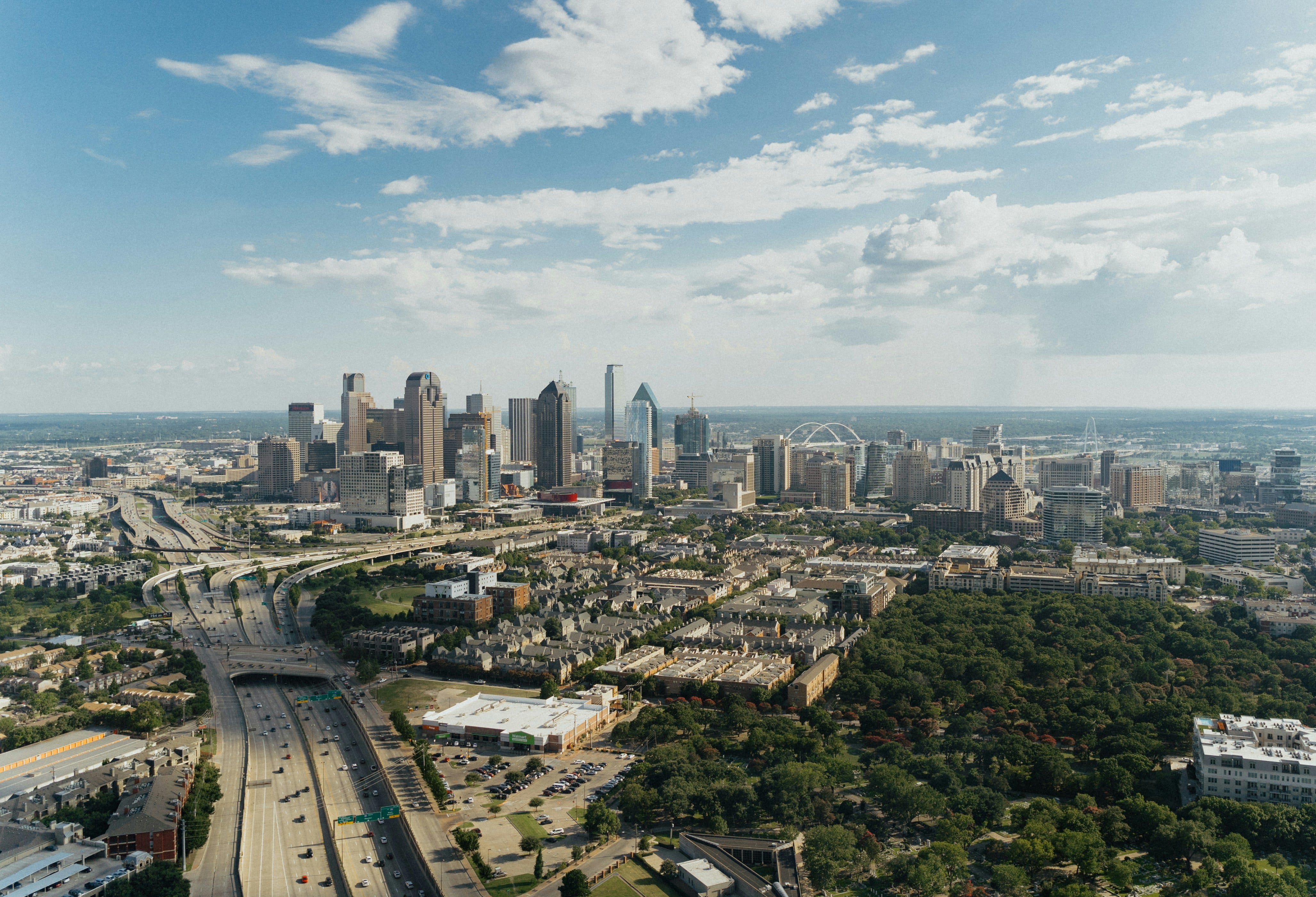
Photo by Erin Hervey on Unsplash